Launch offer — valid today only

📄 Digital book in PDF · read it on your phone or print it

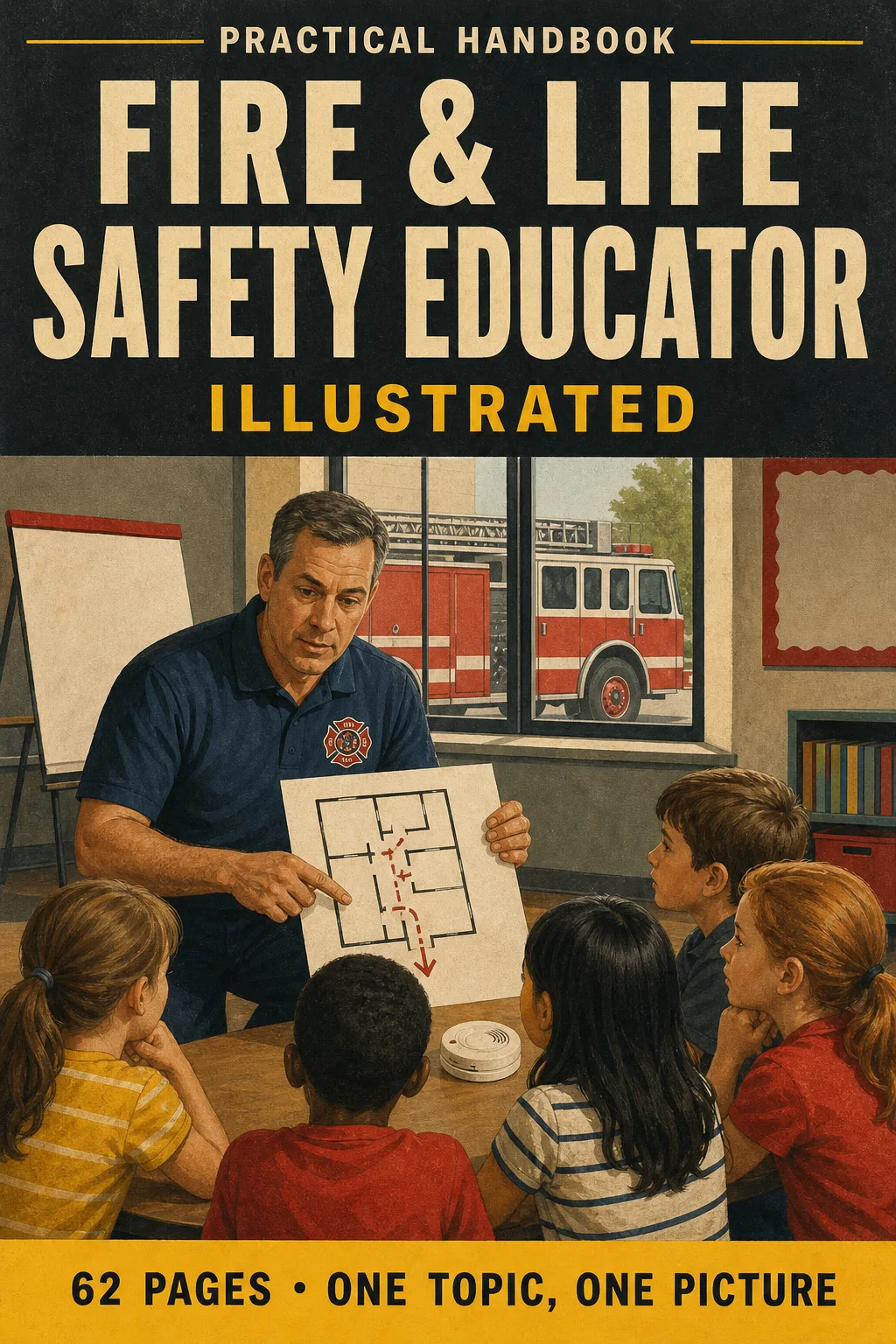
Fire & Life Safety Educator I, Illustrated: Plan, Deliver and Evaluate Any Program in 4 Steps One Topic on Every Page

Smoke alarm placement, escape plans, scald prevention, a room fire stage by stage, community risk data, ABCD objectives, lesson delivery and program evaluation. Every topic gets its own page: the drawing first, then what you need to remember. 62 illustrated pages.

YES, I WANT THE ILLUSTRATED BOOK

🔒 Secure checkout · PDF by email · 30-day guarantee

Every topic, its own page4 steps, always in this order: risk and audience → objective and message → presentation → evaluation
62 illustrated pages8 parts, from the educator's job to the final pre-exam checklist
Up-to-date sourcesNFPA 1030 (2024 edition), NFPA 72 and USFA
PDF by emailFormat

Look Inside the Book

Every page has one big drawing and a box with the numbers, steps and rules you need to know:

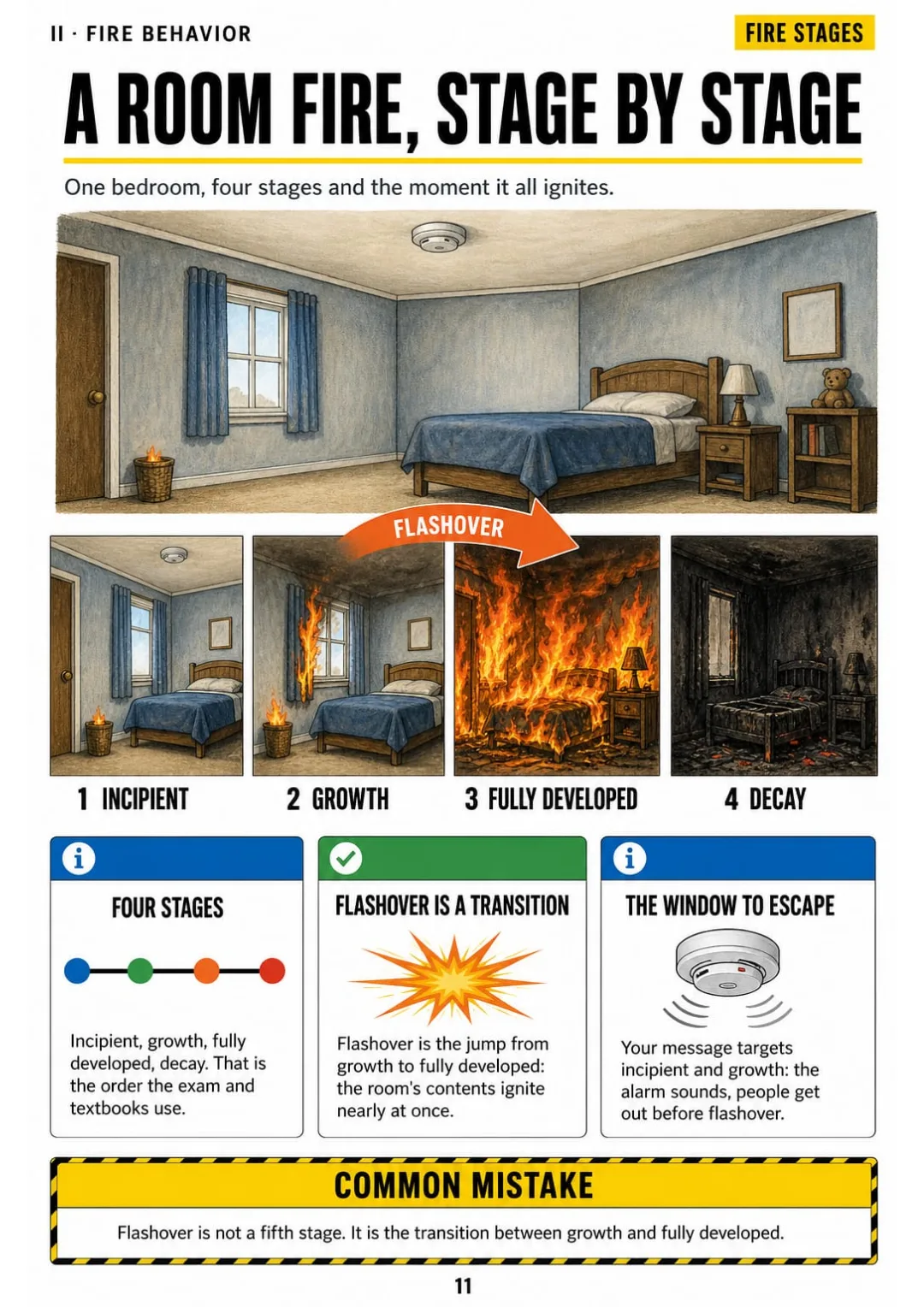
Incipient → growth → (flashover) → fully developed → decay, drawn in one bedroom.
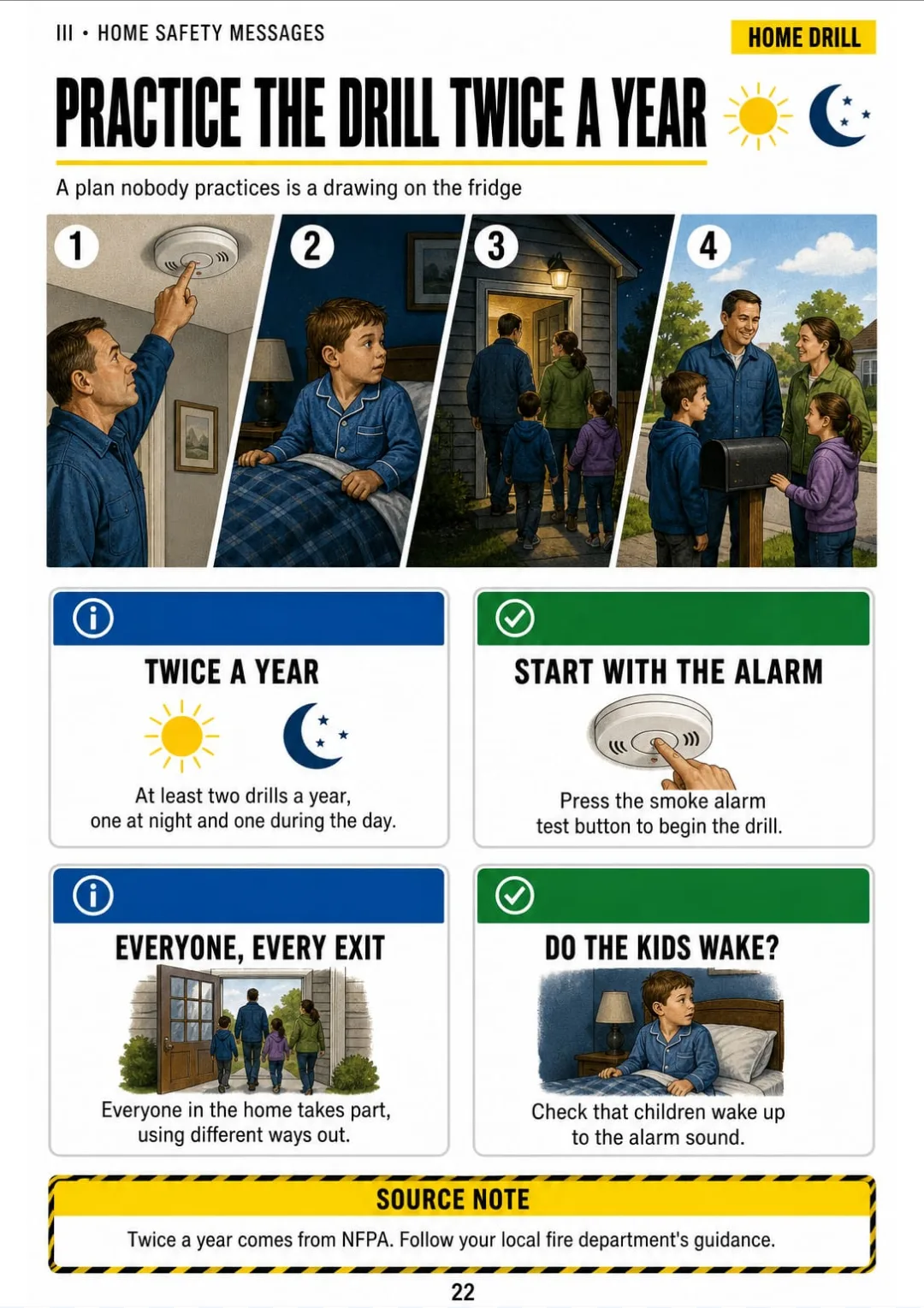
Practice twice a year, day and night, starting with the alarm test button.
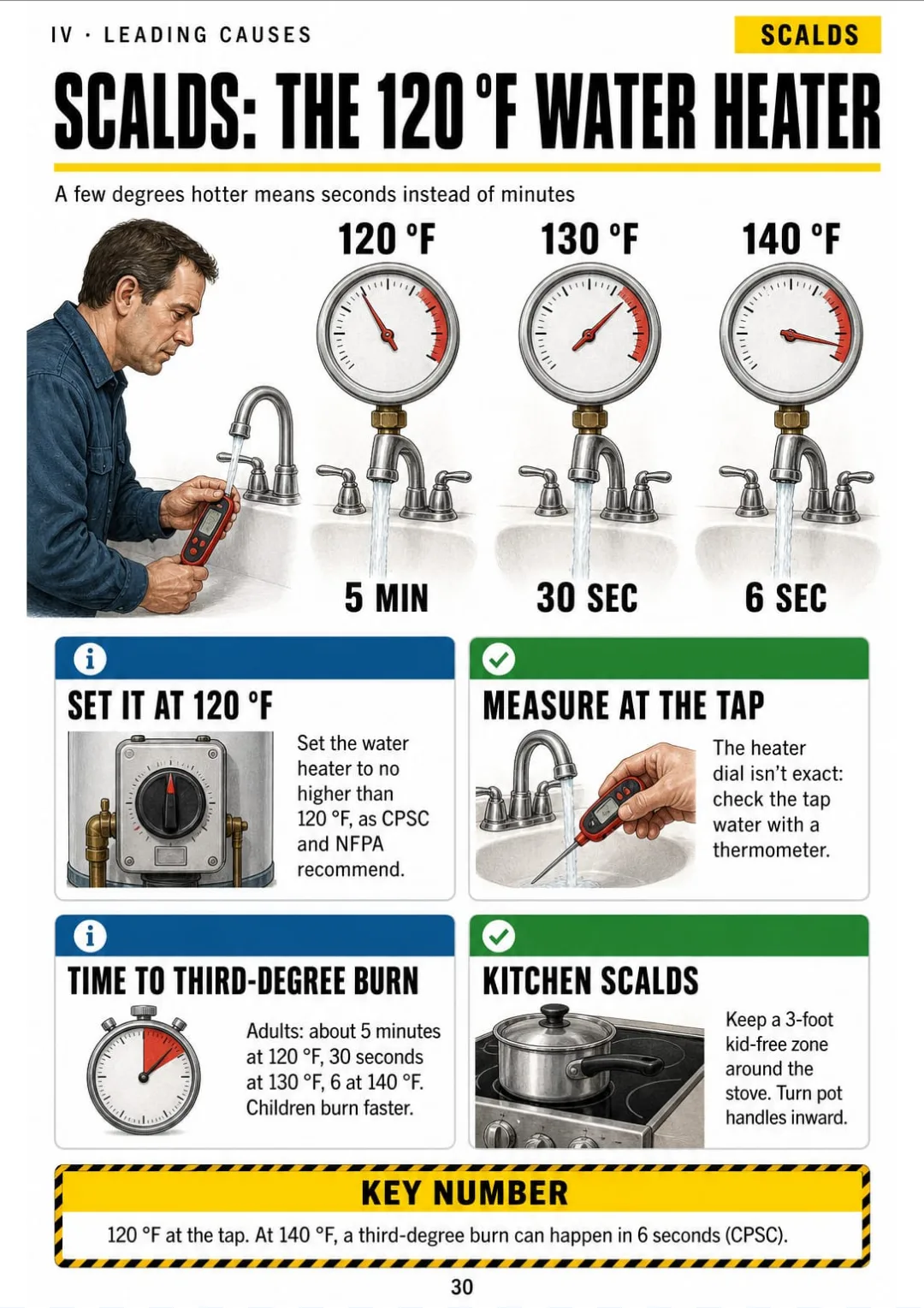
120 °F: about 5 min to a third-degree burn · 140 °F: about 6 seconds (CPSC)
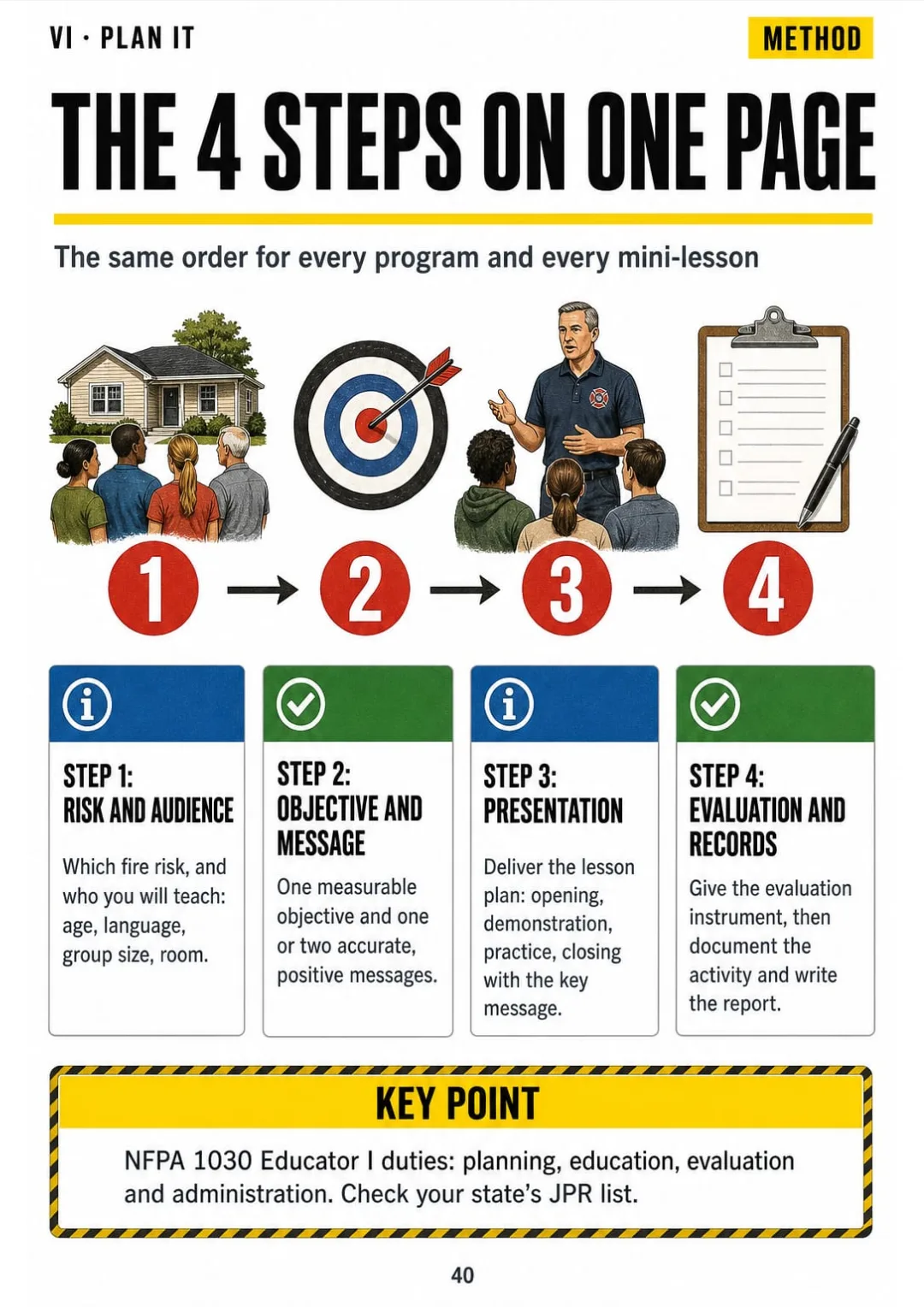
Risk and audience → objective and message → presentation → evaluation and records.
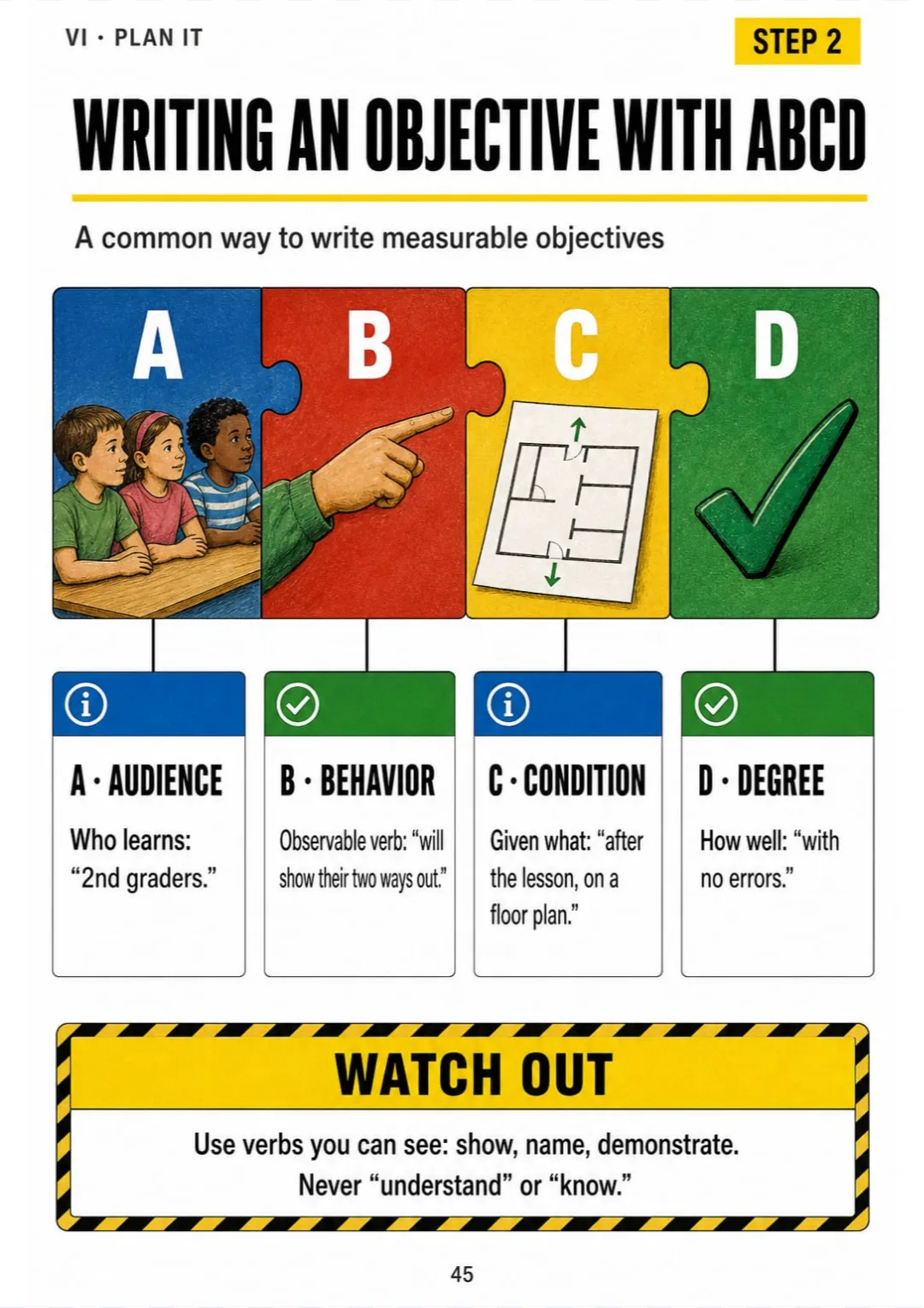
"After the lesson, 2nd graders will show their two ways out on a floor plan with no errors."
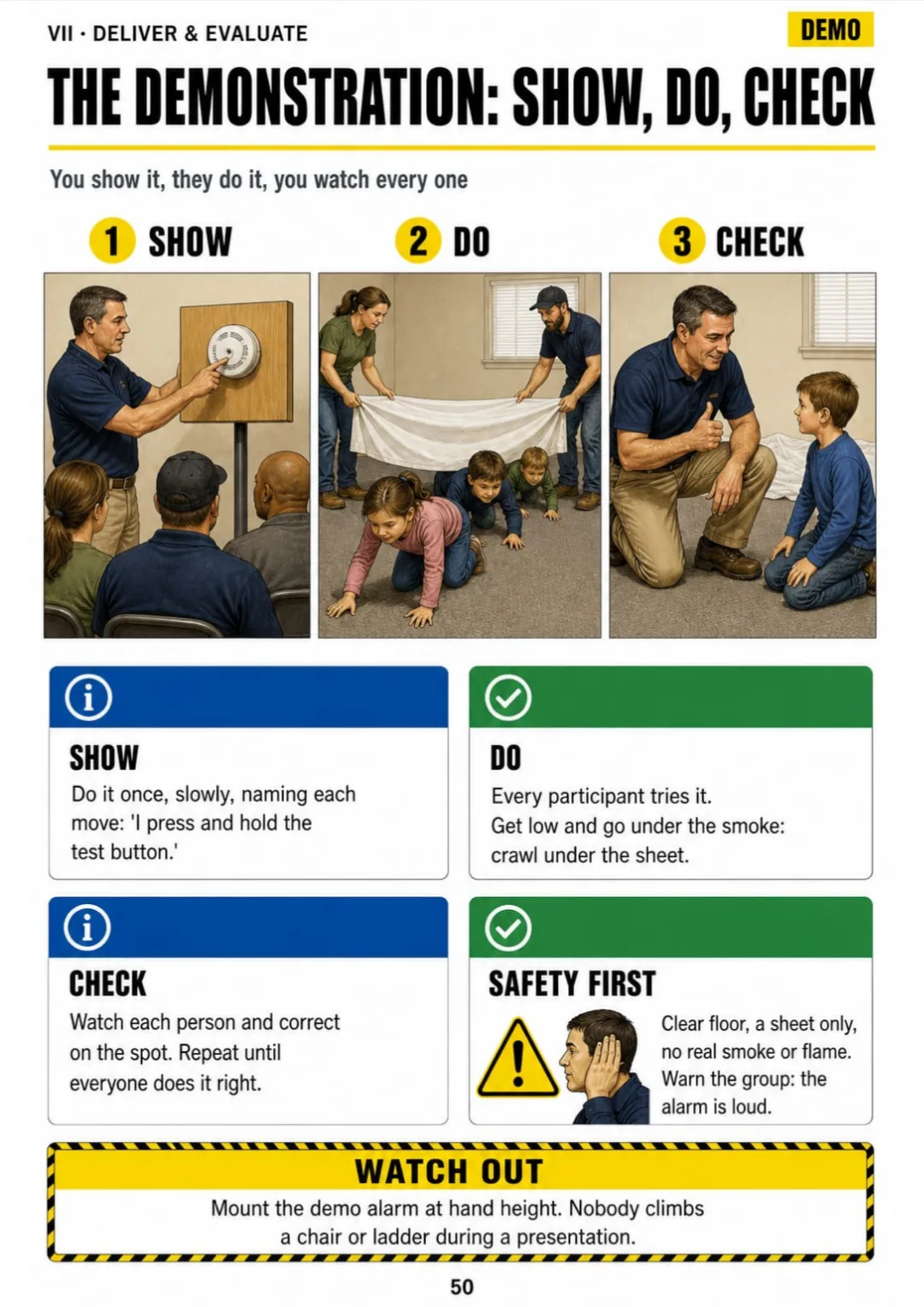
Show, do, check: test-button demo and crawling under a bedsheet smoke line.
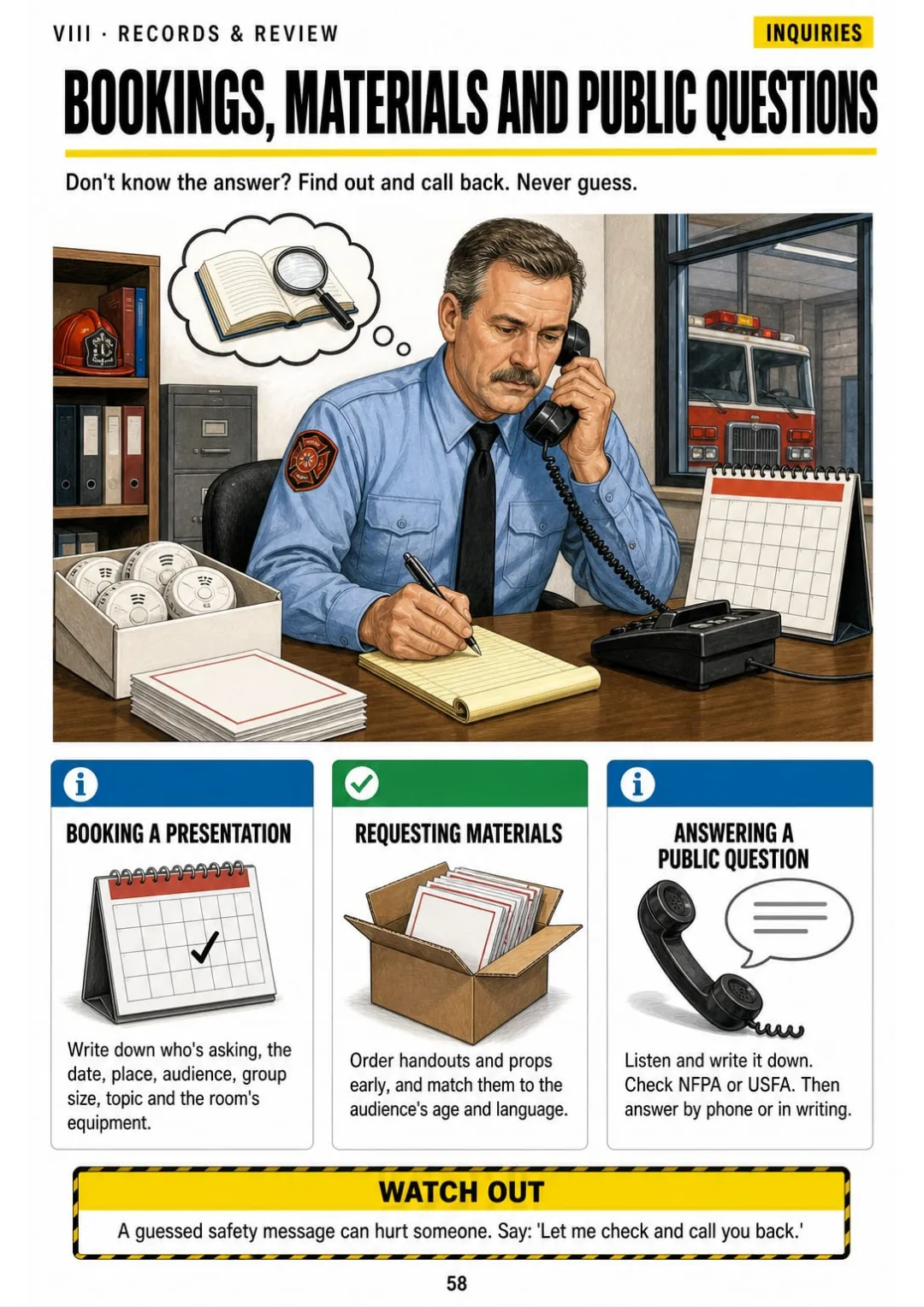
Booking a presentation, ordering materials and answering a public question, step by step
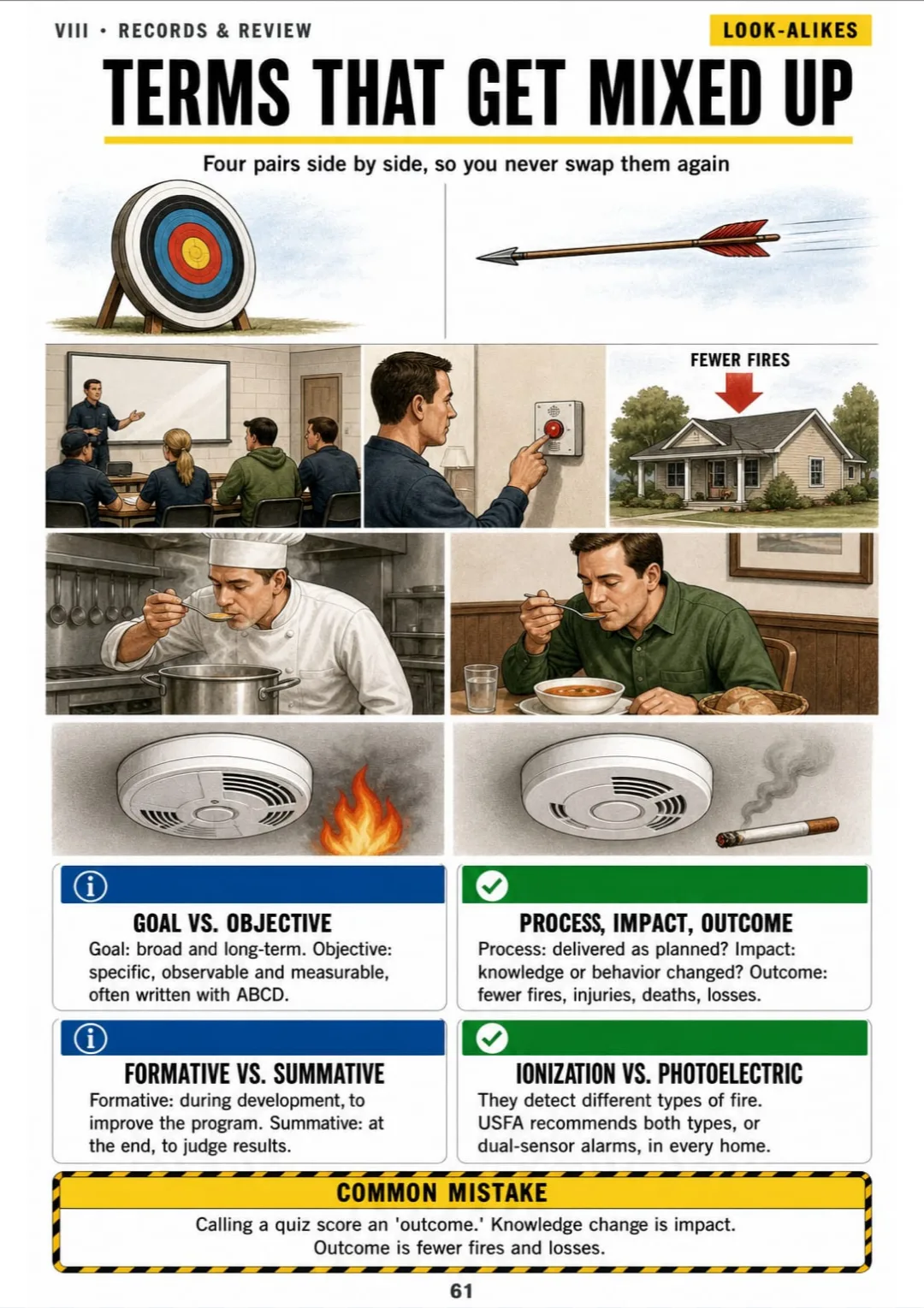
Goal vs. objective, process vs. impact vs. outcome, formative vs. summative, ionization vs. photoelectric

Swipe to see more →

These are real pages from the book. The table of contents is the full one: 8 parts and 58 topics.

The Problem Isn't You. It's How It Was Explained to You.

You're standing in front of thirty older adults at the senior center. A woman raises her hand: what should my water heater be set to, and how fast can tap water burn me?

You read it in the manual. But in the manual it's one long paragraph of temperatures, seconds and burn degrees, and in front of a room the numbers blur together.

120 °F: about 5 min to a third-degree burn · 140 °F: about 6 seconds (CPSC)

In the book, scalds are one page: the water heater dial drawn at 120 °F and two faucets side by side. 120 °F: about 5 minutes to a third-degree burn. 140 °F: about 6 seconds.

Same with smoke alarm placement, the 3-foot rule for space heaters, the home escape plan, carbon monoxide and a room fire stage by stage: each one has its own page.

So you give her the number, tell her why it matters when the grandkids visit, and keep going without opening the manual.

COMPARE FOR YOURSELF

The Same Topic, Two Ways to Study It

THIS
  • The manual: line after line after line
  • Alarm placement explained only in words
  • You walk into the exam still unsure
Smoke alarms shall be installed in accordance with the applicable provisions of NFPA 72 and the manufacturer's published instructions. Where wall mounting is permitted, the top of the device shall be located not more than 12 in. (300 mm) below the ceiling. In order to reduce nuisance alarms, devices shall generally not be installed within 10 ft (3 m) of stationary or fixed cooking appliances, except where otherwise permitted for listed devices, and consideration shall be given to airflow, dead air spaces and sloped ceilings.
FOR THIS
  • The alarm on the ceiling and on the wall, in one drawing
  • The 12 in and the 10 ft in a box
  • You see it and you get it
Practice twice a year, day and night, starting with the alarm test button.
CONTENTS

Take a Look at the 8 Parts and 58 Topics

The job and the exam, fire behavior, home safety messages, leading causes, community risk reduction, the 4-step method to plan, deliver and evaluate, and the final review: 62 pages, all illustrated.

IThe Job and the Exam · pp. 5-9
  1. What a Fire & Life Safety Educator I Does
  2. NFPA 1035 Became NFPA 1030: What Changed
  3. How to Read a JPR in 3 Parts
  4. Written Exam vs. Practical Evaluation
  5. Firefighter vs. Educator: Same Fire, Different Job
IIFire Behavior for the Classroom · pp. 10-15
  1. The Fire Triangle and the Tetrahedron
  2. A Room Fire, Stage by Stage
  3. Why You May Have Only 2 Minutes
  4. Smoke Is the Killer, Not Flames
  5. Closed Door vs. Open Door
  6. Classes of Fire and Extinguisher Basics
IIIHome Fire Safety Messages · pp. 16-25
  1. Smoke Alarms: Where They Go
  2. Smoke Alarms: Ceiling, Wall and Distances
  3. Ionization, Photoelectric, Combination
  4. Test Monthly, Replace at 10 Years
  5. Alarms for People Who Are Deaf or Hard of Hearing
  6. The Home Escape Plan
  7. Practice the Drill Twice a Year
  8. Get Out, Stay Out, Call 911
  9. Stop, Drop and Roll vs. Cool a Burn
  10. House Numbers and Home Fire Sprinklers
IVLeading Causes and Other Risks · pp. 26-32
  1. Cooking: The Leading Cause of Home Fires
  2. Heating: The 3-Foot Rule
  3. Electrical and Smoking Fires
  4. Carbon Monoxide: The Invisible Risk
  5. Scald Prevention: The 120 °F Water Heater
  6. Matches, Lighters and Youth Firesetting
  7. Beyond Fire: Falls and Other Life Safety
VCommunity Risk Reduction · pp. 33-39
  1. What Community Risk Reduction Means
  2. The 5 E's of Risk Reduction
  3. Where the Data Comes From
  4. Reading Incident Data: Who, Where, When, Why
  5. High-Risk Groups
  6. Ranking Risks: Frequency vs. Severity
  7. Partners in the Community
VIThe 4-Step Method, Steps 1-2: Plan It · pp. 40-47
  1. The 4 Steps on One Page
  2. Step 1: Know Your Audience
  3. How Adults and Children Learn
  4. Preschoolers: Teach Without Fear
  5. Goal vs. Objective
  6. Writing an Objective with ABCD
  7. Learning Domains: Know, Feel, Do
  8. Choosing Messages and Materials
VIIThe 4-Step Method, Steps 3-4: Deliver and Evaluate · pp. 48-56
  1. Step 3: The Lesson Plan Layout
  2. The Opening: First 2 Minutes
  3. The Demonstration: Show, Do, Repeat
  4. Questions and Checking for Understanding
  5. The Closing: Repeat the Key Message
  6. Presentation Skills in Front of an Evaluator
  7. Adapting on the Spot
  8. Step 4: Evaluating a Presentation
  9. Process, Impact and Outcome Evaluation
VIIIRecords and Final Review · pp. 57-62
  1. Records and Reports
  2. Scheduling, Resources and Public Inquiries
  3. One Mini-Lesson, Planned Start to Finish
  4. Key Numbers on One Page
  5. Terms That Get Mixed Up
  6. Before Your Exam: Final Checklist

One Page, One Topic, All Clear

Think of it this way:

It's your practical evaluation. The evaluator hands you the scenario, second graders and 20 minutes, and asks for your objective before you start.

In the book you open the ABCD page and see the objective split into its four parts: audience, behavior, condition, degree. "After the lesson, 2nd graders will show their two ways out on a floor plan with no errors."

"After the lesson, 2nd graders will show their two ways out on a floor plan with no errors."

Same with smoke alarm placement, a room fire stage by stage, the 120 °F water heater, the 5 E's and process vs. impact vs. outcome evaluation: each one on its own page.

Fire & Life Safety Educator I Illustrated is 8 parts and 58 topics, all drawn, and it ends with the key numbers on one page, the terms that get mixed up and a final checklist before your exam.

What you see drawn, you don't have to memorize.

What's Inside Fire & Life Safety Educator Illustrated:

Ipp. 5-9

The Job and the Exam

Know exactly what you'll be asked: what an Educator I does, how NFPA 1035 became NFPA 1030, how to read a JPR in 3 parts, written exam vs. practical evaluation.

IIpp. 10-15

Fire Behavior for the Classroom

The fire triangle and tetrahedron, a room fire stage by stage, why you have less than 2 minutes, smoke, closed vs. open doors, fire classes and extinguishers.

IIIpp. 16-25

Home Fire Safety Messages

Where smoke alarms go and at what distance, alarm types, test and replacement, alarms for people who are deaf, escape plans, drills, stop, drop and roll vs. cooling a burn, sprinklers.

IVpp. 26-32

Leading Causes and Other Risks

Cooking, heating and the 3-foot rule, electrical and smoking fires, carbon monoxide, scalds and the 120 °F water heater, youth firesetting, falls.

Vpp. 33-39

Community Risk Reduction

What community risk reduction means, the 5 E's, where the data comes from, reading incident data, high-risk groups, ranking risks, community partners.

VIpp. 40-47

The 4-Step Method, Steps 1-2: Plan It

Plan any program the same way every time: the 4 steps on one page, knowing your audience, how adults and children learn, preschoolers, goal vs. objective, ABCD objectives, learning domains, messages and materials.

VIIpp. 48-56

The 4-Step Method, Steps 3-4: Deliver and Evaluate

The lesson plan layout, the opening, the demonstration, checking for understanding, the closing, presenting in front of an evaluator, adapting on the spot, evaluation types.

VIIIpp. 57-62

Records and Final Review

Records and reports, scheduling and public inquiries, one mini-lesson planned start to finish, key numbers, terms that get mixed up, the final checklist.

At the end of the book: Key numbers on one page, the terms that get mixed up and a final pre-exam checklist.
Plus: 2 Free Books

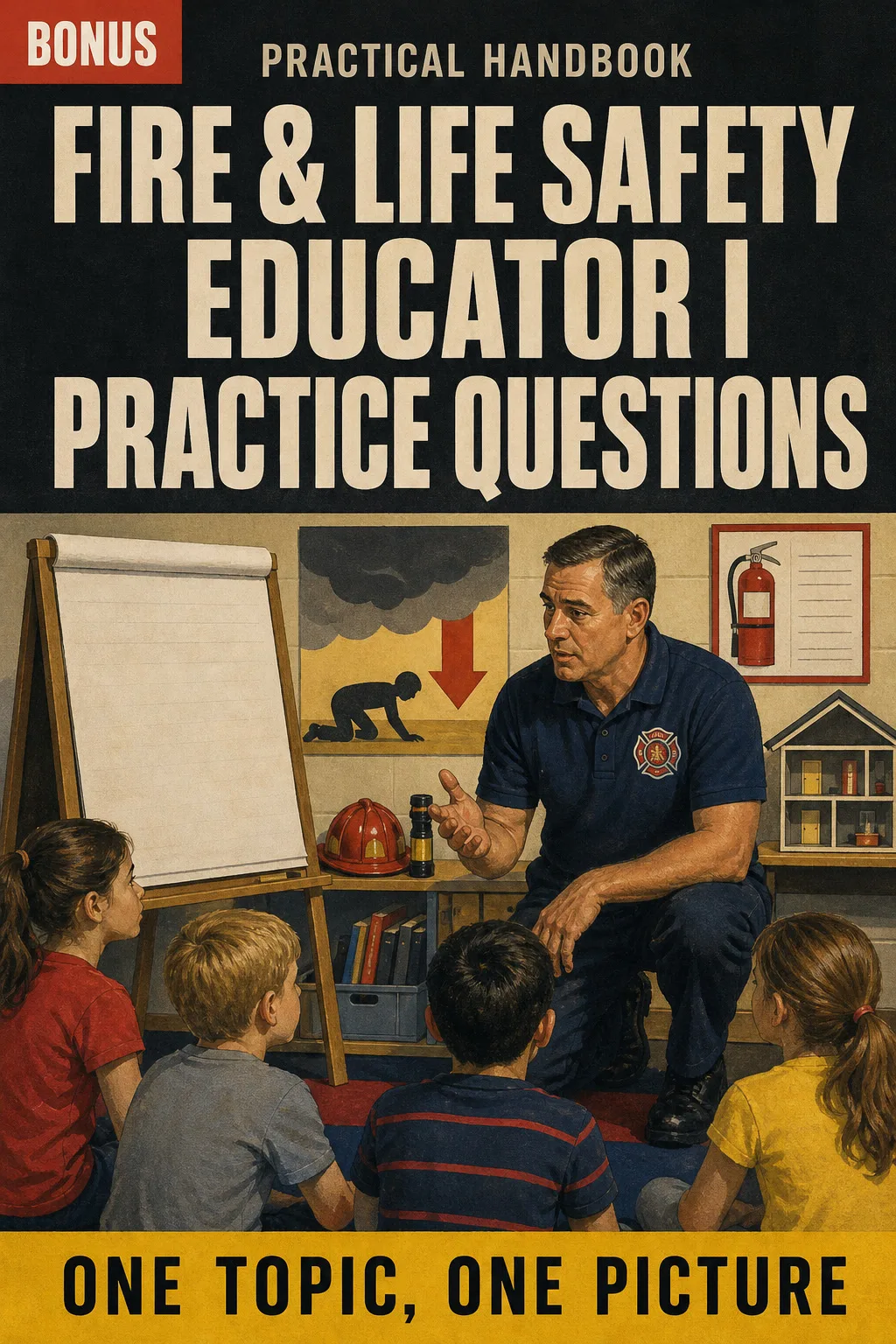
Fire & Life Safety Educator I Practice Questions

BONUS 1: «Fire & Life Safety Educator I Practice Questions»

Value on its own: US$ 17.90

Exam-style questions with the answer explained and the page to go back to, so you see where you stand before test day.

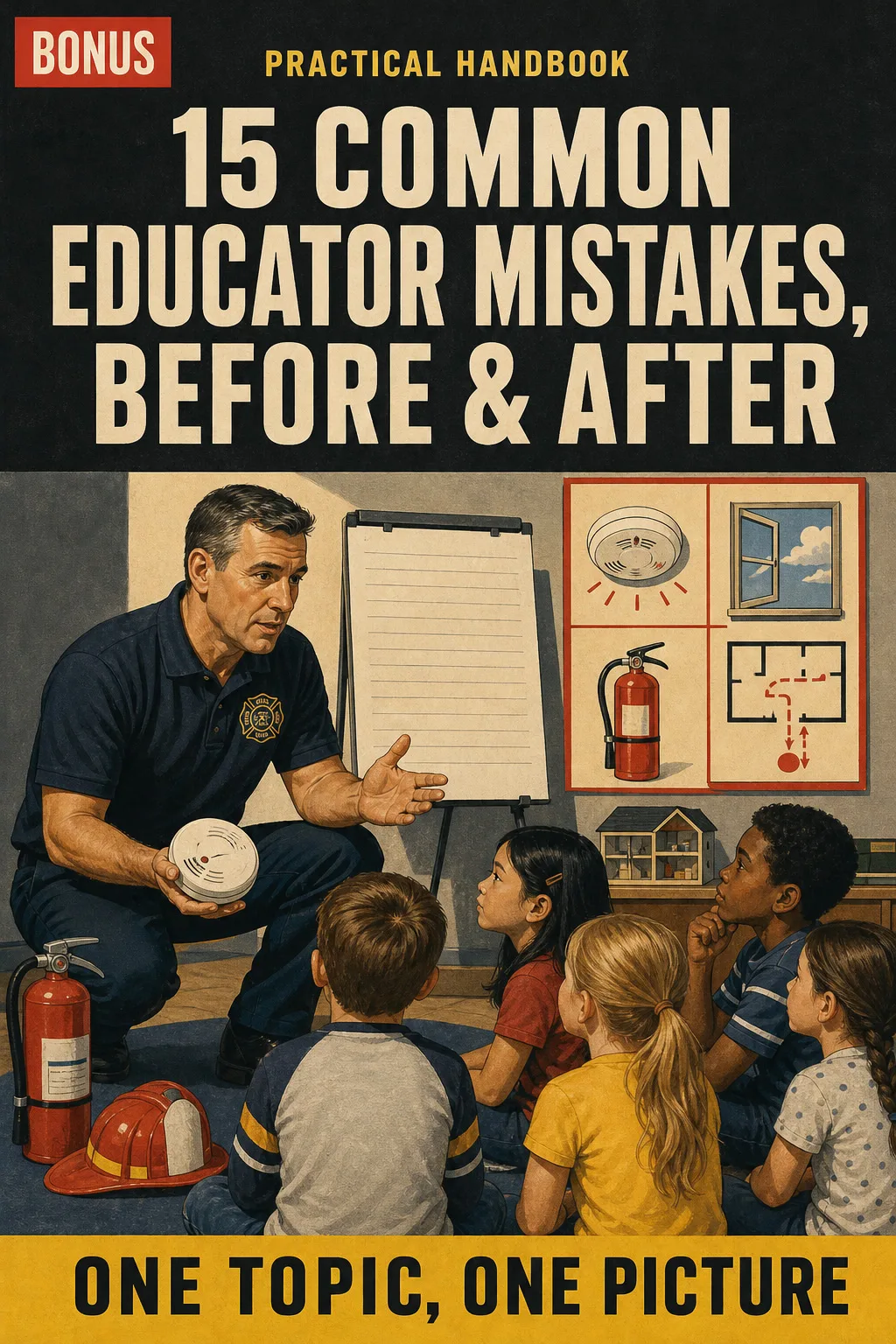
15 Common Educator Mistakes, Before & After

BONUS 2: «15 Common Educator Mistakes, Before & After»

Value on its own: US$ 14.90

The most frequent mistakes in lessons and program plans, each drawn side by side with the right way, to review in one sitting.

Fire & Life Safety Educator Illustrated with 2 Free Books

  • Fire & Life Safety Educator Illustrated: 62 illustrated pagesUS$ 63
  • BONUS 1: Fire & Life Safety Educator I Practice QuestionsUS$ 17.90
  • BONUS 2: 15 Common Educator Mistakes, Before & AfterUS$ 14.90
  • High-resolution PDF to printIncluded
Total value US$ 95.80
YOUR PRICE:
US$ 27
You save US$ 68.80
YES, I WANT FIRE & LIFE SAFETY EDUCATOR ILLUSTRATED FOR US$ 27

📄 This is a digital PDF book sent to your email: nothing is printed or shipped.

Secure purchaseEncrypted payment30-day guarantee

PDF by email: We email you Fire & Life Safety Educator Illustrated as a PDF, together with the two free books. It's a single payment: no installments, no extra charges.

Who This Book Is For

You're taking the Educator I course

You're taking the Educator I course

Every JPR turned into a drawing you can study between shifts, with the 4 steps always in the same order.

Your exam and evaluation are close

Your exam and evaluation are close

The key numbers, the terms that get mixed up and a mini-lesson planned start to finish, to review and walk in with everything in order.

You already do public education

You already do public education

The right message for each audience and the program steps at hand, printed, before your next school visit or open house.

Everything You Get Today

US$ 95.80US$ 27
YES, I WANT FIRE & LIFE SAFETY EDUCATOR ILLUSTRATED FOR US$ 27

📄 This is a digital PDF book sent to your email: nothing is printed or shipped.

30DAYS
GUARANTEE

30-Day Guarantee

Try Fire & Life Safety Educator Illustrated for 30 days, bonus books included.

We refund everything if the file won't open, if the book isn't what you see here, if you were charged twice or if the email doesn't arrive. Just email us.

You pay once. No subscriptions.

Frequently Asked Questions

Is it for me if I'm a firefighter who just got assigned to public education?

Yes. It doesn't teach you how to fight fire. Part 2 covers fire behavior the way you explain it to the public: why there's less than 2 minutes, why a closed door matters. The rest of the book is what the Educator I course adds: risk data, audiences, objectives, delivery and evaluation.

Where does the content come from?

From the Fire and Life Safety Educator I job performance requirements in NFPA 1030 (2024 edition, which replaced NFPA 1035), plus NFPA 72, NFPA, USFA and CPSC data for home safety. It isn't written for one state: it follows the national standard that state fire academies certify against. Ask your academy which edition it tests on (some still use NFPA 1035) and check each page against it.

Is it official material?

No. It's an independent illustrated study book. It doesn't give you a certificate or continuing education hours: your certification comes only from your state fire academy. It isn't published or endorsed by NFPA, IFSAC, Pro Board or any state fire academy.

Does it replace the course or my academy training?

No. It helps you study and review alongside your official course. The burn and carbon monoxide pages are public education messages, not medical advice.

Are the practice questions the real exam questions?

No. They're written for this book, in exam style, with the answer explained and the page to go back to.

When and how do I get it?

The book and the 2 bonus books arrive as a PDF by email, at the address you enter at checkout.

Do I have to pay every month?

No. It's a one-time payment.

Can I have it on paper?

Yes. It's a PDF, so you can print the whole book or just the pages you want to keep on hand.

How does the refund work?

You have 30 days. We refund everything if the file won't open, if the book isn't what you see on this page, if you were charged twice or if the email doesn't arrive: just email us.

Before You Close This Page

No more rereading with nothing sticking.

Alarm distances, escape plans, ABCD objectives: you see them drawn and you've got them.

You walk into the exam and the evaluation knowing where everything is.

Drawings make studying faster.

The book is right below.

One-time payment: US$ 27 · Guarantee: 30 days · PDF by email

YES, I WANT FIRE & LIFE SAFETY EDUCATOR ILLUSTRATED FOR US$ 27

📄 This is a digital PDF book sent to your email: nothing is printed or shipped.